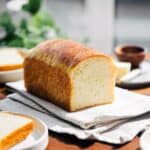
Sourdough Brioche Bread
Get ready to meet the charming hybrid that’s been rising up in the world of bread: Sourdough Brioche! Imagine the buttery embrace of a classic brioche and the charming tang of a rustic sourdough had a delicious baby. It’s the perfect love story, written in flour and water, and it's here to steal the spotlight on your breakfast table.
Servings: 12 Slices
Calories: 175kcal
Equipment
- 9 x 4 Pullman Loaf Pan (without the cover)
Ingredients
- ¼ Cup Warm Water
- 3 Tablespoons Granulated Sugar
- ⅔ teaspoon Active dry yeast
- ½ Cup Sourdough Discard
- 2 Cup All-Purpose flour
- 2 Large Eggs
- ¾ teaspoon Salt
- ¼ cup + 1 Tablespoon Unsalted Butter room temperature
- Egg Wash 1 Egg whisked with 1 teaspoon of milk or cream
Instructions
- Mix together the warm water, sugar and yeast together in your stand mixer’s mixing bowl. Let this mixture rest undisturbed for 5-10 minutes until you start to see bubbles start to form on the surface.
- Add your sourdough discard, flour and eggs to the active yeast mixture using the paddle attachment. After one minute of mixing on medium speed, the ingredients should be well combined. At this point, switch to using the dough hook attachment and knead for 6-8 minutes before adding salt and butter one tablespoon at a time. Continue kneading with the dough hook for another 5-8 minutes until the dough looks smooth and glossy and you notice that the dough is not sticking to the sides of the bowl. This means that your dough has been well developed and we can stop mixing. If your dough is looking wet after adding the butter, never fear! It needs to strengthen, and mixing on medium high speed will help the gluten strands to develop as you hear the dough slapping the sides of the mixing bowl.2 Cup All-Purpose flour, 2 Large Eggs, ¾ teaspoon Salt, ¼ cup + 1 Tablespoon Unsalted Butter, ½ Cup Sourdough Discard
- Place the dough in an oiled bowl and allow to proof for 1.5 to 2 hours covered in plastic wrap in a warm place. Then, remove the plastic wrap, and degas the dough by punching it down before moving on to the next step, or placing the dough into the fridge to rest overnight - either method will work depending on how much time you have!
- Once the dough has doubled in size or has rested overnight, transfer it to a floured surface and shape it into an oval or rectangle, matching the width of your loaf pan. Tightly roll the dough and place it into the greased loaf pan, pinching the ends of the dough. I like to gently but firmly press down to evenly distribute it in the pan. Cover and let the dough rise for about 1.5-2 hours in a warm spot.
- Gently brush the proofed loaf with egg wash and bake at 330°F for about 35 minutes or until the internal temperature of your loaf reach 190°F. Cover the top of the bread with aluminum foil if you notice it browning too quickly as it bakes - I usually check around 25 minutes to see the coloring. Once baked, immediately remove the loaf from it’s pan to prevent a soggy bread bottom and allow the loaf to cool on a cooling rack.Egg Wash
Video
" player-type="default" override-embed="default"]
Notes
How should I store brioche? Does brioche freeze well?
To keep that golden loaf as fresh as the day it was baked, you have a few options. For short-term love, store your brioche in a bread box or airtight container at room temperature; this will help maintain its softness for a few days.
Brioche also freezes beautifully! 🧊✨ Simply wrap it tightly in plastic wrap or aluminum foil, pop it in a freezer bag (removing as much air as possible), and store in the deep freeze for up to a month. When you're ready to enjoy, let it thaw at room temperature or give it a gentle warm-up in the oven. Voilà – freshly baked brioche bliss anytime you fancy!
Nutrition
Calories: 175kcal | Carbohydrates: 34g | Protein: 6g | Fat: 1g | Saturated Fat: 0.4g | Polyunsaturated Fat: 0.4g | Monounsaturated Fat: 0.4g | Trans Fat: 0.004g | Cholesterol: 41mg | Sodium: 259mg | Potassium: 60mg | Fiber: 1g | Sugar: 4g | Vitamin A: 59IU | Vitamin C: 0.001mg | Calcium: 12mg | Iron: 2mg
